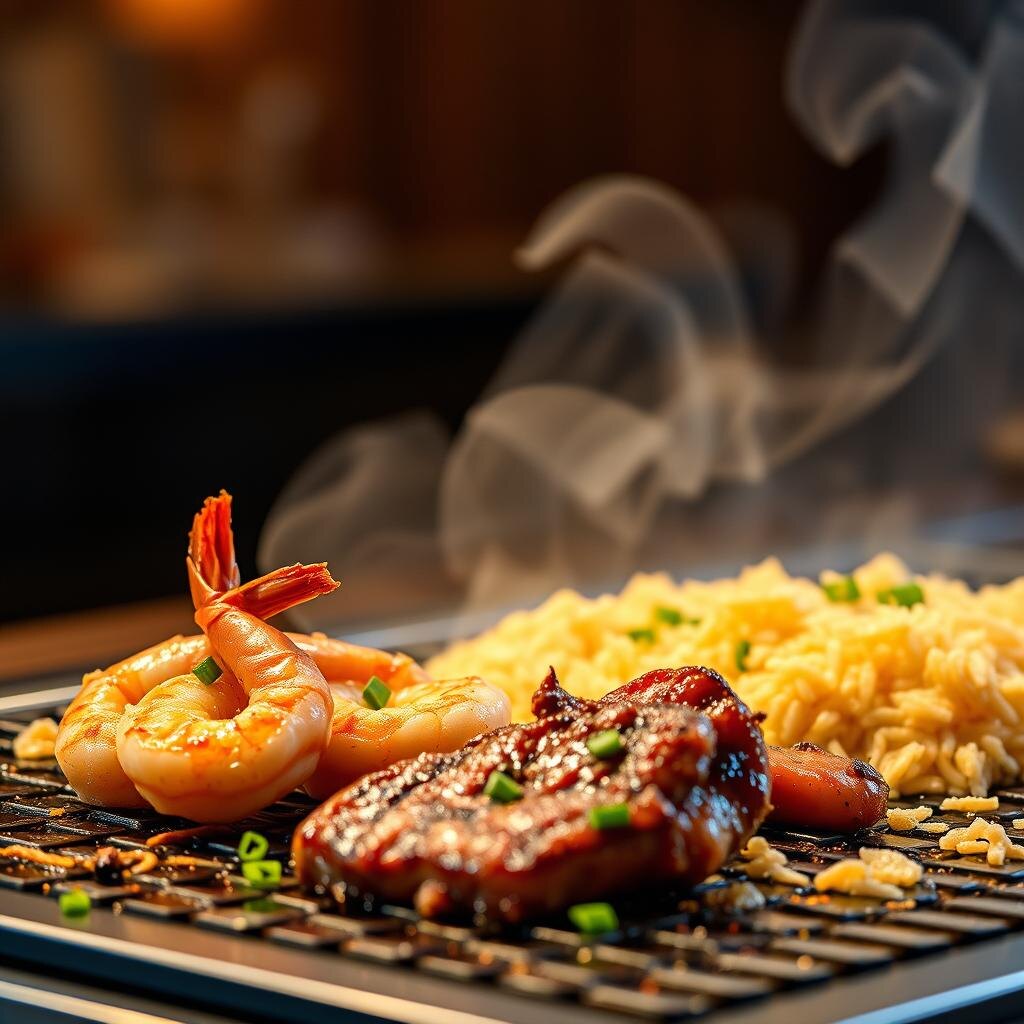
If you own a teppanyaki or hibachi restaurant, "How much will my insurance cost?" is one of the first questions you ask — and one of the hardest to answer with a single number. A teppanyaki concept is not a typical sit-down restaurant. You have chefs cooking on a screaming-hot grill inches from your guests, open flame as part of the show, a full bar in most locations, and high-volume seating. Every one of those features moves the needle on teppanyaki restaurant insurance cost. Below we break down what actually drives your premium, what a complete program tends to run, and the practical levers that bring the number down.
What a Complete Teppanyaki Insurance Program Includes
Before talking price, it helps to know what you are buying. A real program for a Japanese steakhouse is usually a bundle, not a single policy:
- General liability — third-party bodily injury and property damage, including premises liability (a guest slips, trips, or is burned) and products-completed operations (illness or injury tied to the food you served).
- Liquor liability / dram shop — protection tied to alcohol service. Essential for any teppanyaki house with a bar, sake, or beer service.
- Commercial property — your building (if owned), tenant improvements, and the teppanyaki grills, hoods, and kitchen equipment.
- Business income — replaces lost revenue if a fire or covered loss shuts you down.
- Equipment breakdown — covers mechanical or electrical failure of grills, refrigeration, and HVAC.
- Workers' compensation — required in nearly every state once you have employees.
- Assault & battery and foodborne illness coverage — often added by endorsement given the crowd sizes and food-service exposure.
The Factors That Drive Your Premium
Sales Volume and Seating Annual gross sales is the single biggest rating factor for general liability and liquor liability. More covers served means more burn exposure and more chances for a claim, so a 200-seat steakhouse doing several million in sales will pay far more than a small 12-seat teppanyaki bar.
Alcohol Sales Percentage Carriers care about the **percentage of revenue from alcohol**, not just whether you serve it. A restaurant where liquor is 15% of sales is rated very differently from a high-energy hibachi-and-cocktail destination where it is 35%+. Higher alcohol percentages raise **dram shop / liquor liability** cost.
The Tableside Cooking Burn Exposure This is what makes teppanyaki unique. **Open-flame tableside cooking** — the onion volcano, the flaming presentation, hot oil and a 500-degree grill within arm's reach of seated guests, including children — creates a real, repeatable burn-injury exposure. Underwriters price hibachi general liability higher than a comparable conventional restaurant because of it. The **number of teppanyaki grills** and how many cooks perform live each shift both factor in.
Building, Equipment, and Location Replacement value of your building and equipment drives property premium. **Location** matters too — local crime, weather and catastrophe exposure (wind, flood, wildfire), and your area's litigation climate all move the number. A coastal property in a high-severity legal venue costs more to insure than the same restaurant inland.
Payroll and Claims History Payroll drives workers' comp directly. And your **loss history** is huge: a clean three-to-five-year record earns credits, while prior burn claims, liquor incidents, or kitchen fires push you toward higher-priced markets.
Typical Cost Ranges
Every restaurant is different, but as a planning guide for a complete teppanyaki/hibachi program in 2026:
- General liability alone: roughly $3,000–$8,000+ per year, higher than a standard restaurant because of the open-flame exposure.
- Liquor liability: often $1,500–$5,000+, scaling with alcohol sales.
- Property + equipment breakdown: $2,000–$10,000+, driven by building and grill values.
- Workers' compensation: rated on payroll, commonly $2,000–$10,000+.
- A bundled complete program (BOP-style package plus liquor and comp): many full-service teppanyaki houses land somewhere in the $10,000–$30,000+ annual range.
Treat these as starting points — your actual quote depends on the factors above.
How to Lower Your Teppanyaki Insurance Cost
You have more control than you think:
- Document chef and safety training. Formal burn-prevention and knife-handling training for teppanyaki chefs is one of the strongest credits available.
- Stay current on ANSUL / hood fire suppression. Keep your ANSUL / hood fire suppression system inspected and tagged on schedule, and maintain a rigorous grease cleaning and hood-degreasing program. Documented maintenance lowers fire-related pricing.
- Run responsible-server (TIPS-style) training. Trained, certified bar and floor staff reduce liquor liability cost.
- Keep a clean loss history. Address near-misses before they become claims.
- Bundle and right-size limits. Packaging coverages with one carrier and choosing sensible deductibles usually beats buying piecemeal.
Get a Real Number for Your Restaurant
Ranges are useful for planning, but the only number that matters is the one tied to *your* sales, *your* grills, and *your* loss history. Teppanyaki Insurance specializes in hibachi and Japanese steakhouse programs and shops your risk to carriers that actually understand open-flame tableside cooking. Reach out for a fast, no-obligation quote and let's build a complete program priced for how your restaurant really operates.