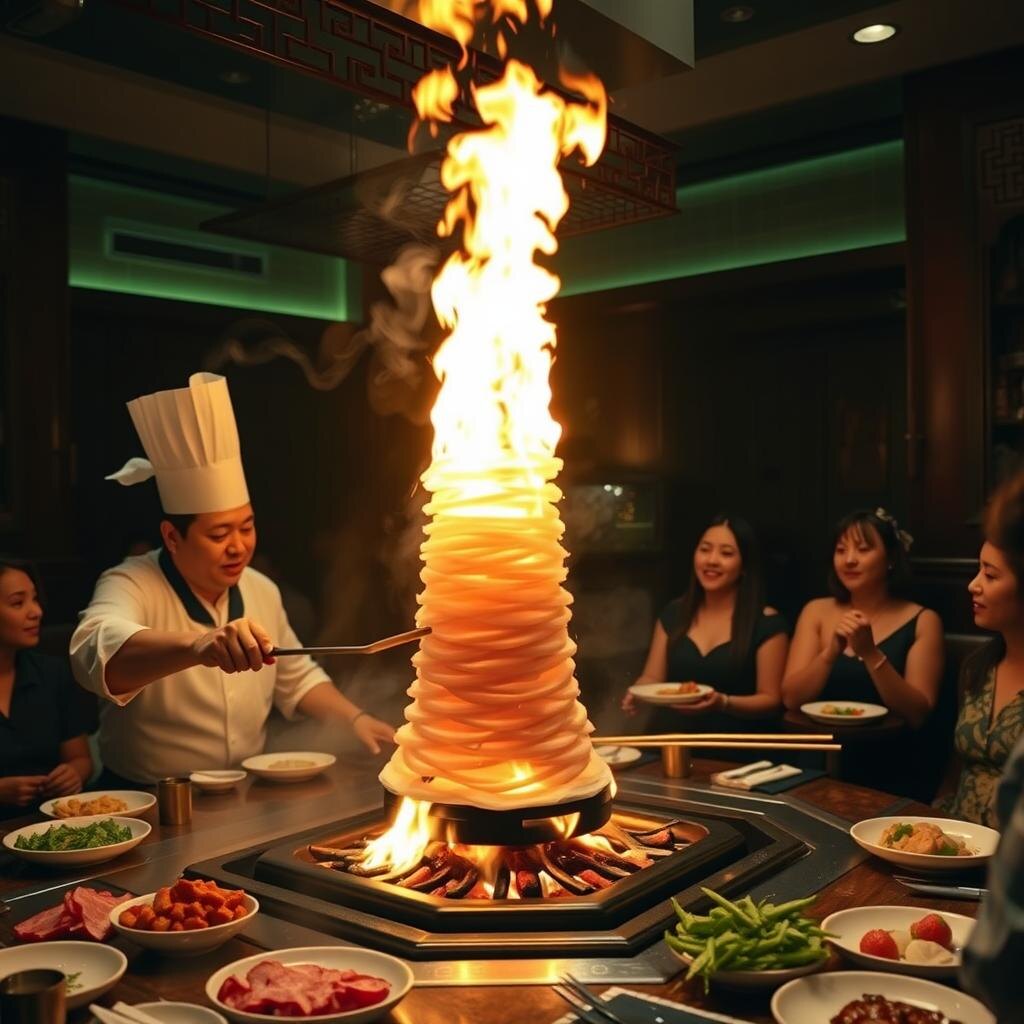
The reason guests book a hibachi table is the same reason your insurance is more complicated than the restaurant down the street: the show. A skilled teppanyaki chef cooking on a 500-degree grill inches from seated guests, sending up a flaming onion volcano, flipping shrimp into pockets and hats, juggling razor-sharp knives and spatulas — that performance *is* the product. It is also the single largest liability exposure in your operation. Understanding how hibachi restaurant liability insurance responds to tableside-cooking injuries is essential to protecting everything you've built.
Why Hibachi Is a Different Risk Than a Normal Restaurant
In a conventional restaurant, the cooking happens behind a wall in the kitchen. Guests never get near the flame, the hot surfaces, or the knives. In a teppanyaki house, you have deliberately moved all of that to the dining table and put an audience around it — frequently including children seated at the grill's edge.
That design choice creates injury exposures most restaurants simply do not have:
- Patron burns from the grill surface, open flame, flare-ups, or splattering hot oil.
- Flying-food injuries — eye injuries, choking, or facial impact when tossed food misses its mark.
- Utensil and knife incidents during the chef's performance.
- Kids near open flame — the most sensitive exposure of all, because a child reaching toward the grill or a flare-up reaching a child can produce severe, high-value claims.
- Smoke, steam, and clothing/hair ignition from the volcano and flame tricks.
Because these incidents are foreseeable and repeatable — they arise from the core service, not a freak accident — underwriters treat hibachi as a distinct, higher-hazard class.
How General Liability and Premises Liability Respond
Your general liability policy is the front line when a guest is injured by the hibachi experience. Two pieces matter most:
Premises Liability **Premises liability** covers third-party bodily injury that happens on your property due to your operations. A guest burned by a flare-up, struck by flying food, or injured by a dropped utensil is a classic premises-liability claim. Your GL policy responds to defense costs and damages up to your limits.
Products-Completed Operations If an injury or illness ties back to the food itself — undercooked protein, an allergen, or **foodborne illness** — that falls under **products-completed operations**, another part of your GL coverage. Tableside cooking blurs the line between "premises" and "product," which is exactly why a hibachi-specific policy matters: a generic restaurant form may not contemplate live, guest-facing flame work.
Many hibachi houses also carry an assault & battery endorsement (high-energy, alcohol-fueled crowds) and confirm their business income coverage will respond if a tableside fire forces a closure.
Why This Exposure Makes Hibachi GL More Expensive
There is no way around it: the open-flame, guest-facing model pushes general liability pricing above a comparable sit-down restaurant. Carriers are pricing for:
- The frequency of minor burns and contact injuries.
- The severity potential of a serious burn — especially to a child — which can become a six- or seven-figure claim.
- The defense cost of injury suits where the "dangerous activity" was intentional showmanship.
The flip side: when you demonstrate strong risk management, you earn credits and access to carriers who actually want hibachi business.
Risk Management That Protects Guests — and Your Premium
You can materially reduce both the chance of an injury and the cost of your coverage:
- Formal chef training and certification. Document burn-prevention, flame-trick, and knife handling protocols for every teppanyaki chef, with refreshers for new hires.
- Enforce guest distance. Train chefs to keep flame height controlled and to pause the show when children lean in. Set a standard distance between the cook surface and seated guests.
- Use guards and barriers where practical, and keep a clear zone around the grill edge.
- Maintain fire systems. Keep your ANSUL / hood fire suppression system inspected and tagged, and run a disciplined grease and hood-cleaning schedule — a grease fire turns a contained show into a catastrophic loss.
- Have an incident response plan. Burn first-aid on hand, documented procedures, and prompt reporting protect injured guests and strengthen your defense.
- Watch alcohol service. Impaired guests near open flame raise risk; responsible-server training and dram shop / liquor liability coverage work hand in hand with your burn exposure.
Cover the Show, Protect the Restaurant
The hibachi experience is worth protecting — and it deserves coverage built for live fire at the table, not a one-size-fits-all restaurant form. Teppanyaki Insurance structures general liability, premises and products-completed operations, liquor, and property coverage around the way hibachi restaurants actually operate. Contact us for a tailored quote and make sure the most exciting part of your dining room is also the best-protected.